
“We publish constantly. AI cites our competitors’ pages.”
Volume isn’t the lever — extractability is. We show which pages models actually cite and what those pages have that yours don’t.
Models don’t read your site the way buyers do — they extract, compare, and quote. Peakmark shows what AI already cites in your category and helps you build content that earns the citation.
No credit card · Set up in minutes · Cancel anytime
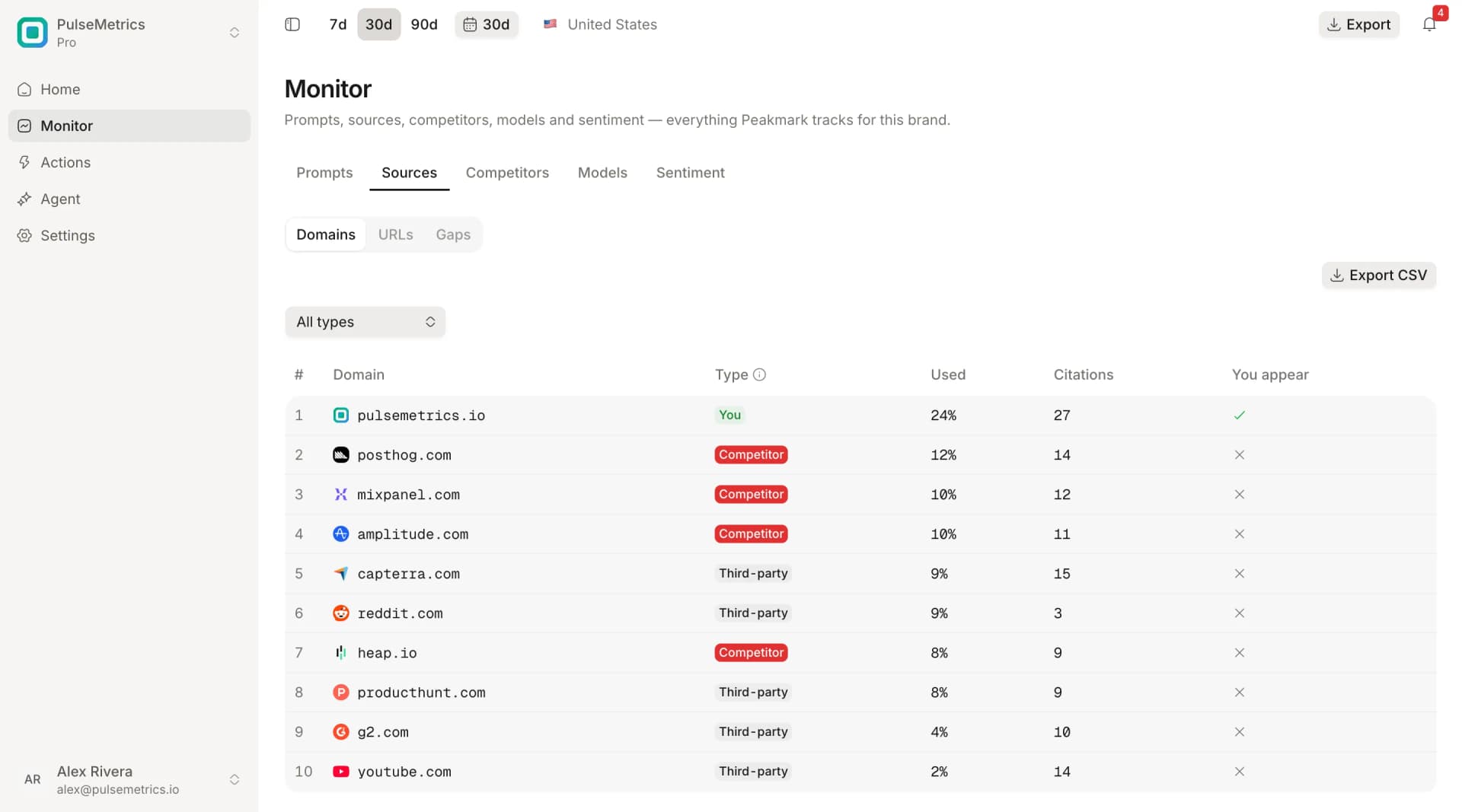
Volume isn’t the lever — extractability is. We show which pages models actually cite and what those pages have that yours don’t.
Models favor direct answers, clear structure, and named facts. Peakmark flags what to restructure — headings, FAQ blocks, schema — so answers can lift from your page.
Models trust corroborated sources. See which communities and review sites feed your category’s answers, and earn presence there alongside your own pages.
Know what gets cited, then build content engineered for it.
The exact domains models read and cite in your category — review sites, communities, listicles, docs — ranked by influence on your answers.
Content generated from prompts you’re losing: question-shaped headings, direct answers up top, facts a model can quote without guessing.
Structured data, llms.txt, AI crawler access, rendering issues — the technical layer that decides if your content is even in the running.
Watch your pages start appearing as sources in AI answers — the clearest signal your content is working.
40%
visibility lift measured for well-structured, citation-ready content in generative engine responses
Aggarwal et al., GEO research, 2023
See which domains and pages power your category’s AI answers today — and where you’re absent.
Generate briefs and drafts targeting lost prompts, structured for extraction: direct answers, clear facts, schema in place.
Publish, then watch citation tracking confirm when models start reading — and quoting — your pages.
Monitoring, evidence, and execution — every piece feeds the next.
Map your category’s sources today and get your first answer-ready briefs in minutes.
Start